Guide: Heating with a balcony solar system – what is really possible
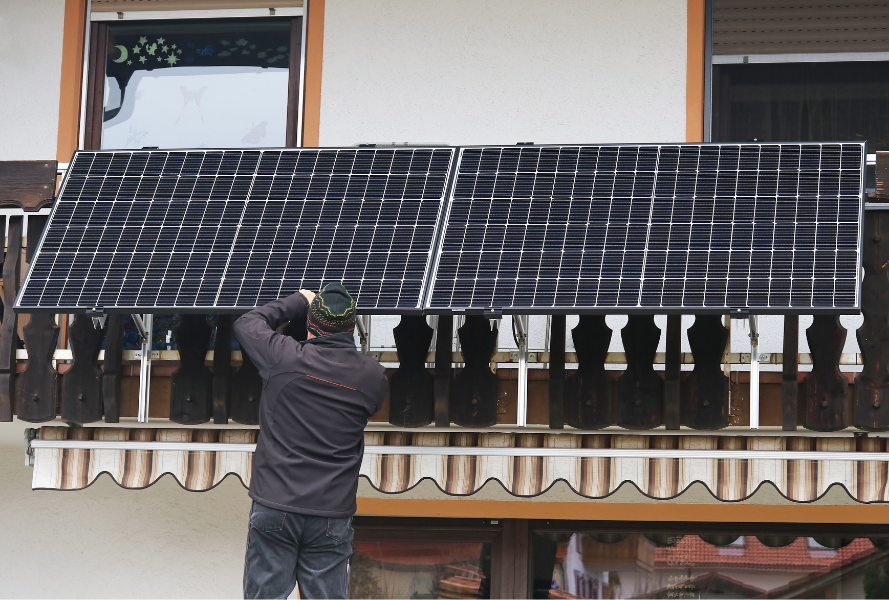
Balcony solar systems have long been more than just a niche topic in Germany. They are relatively affordable, quick to install, and generate electricity right where it is needed. But can solar power from your own balcony also be used for heating? The honest answer: A balcony solar system cannot replace a heater. However, it can be quite useful as a supplement to energy-efficient zone heating. This guide shows what is realistic and what is not.
What is a balcony solar system?
A balcony solar system, technically known as a plug-in solar device, consists of one or more solar panels and an inverter that converts the solar electricity into standard household alternating current. The electricity flows directly into the home network and is first consumed by the devices that are currently running. Only what is not consumed goes into the public grid.
The most important rules (as of autumn 2026)
- Power: The inverter may feed up to 800 watts into the home network. The solar panels may have a combined peak power of up to 2,000 watts.
- Connection: Standard-compliant complete devices with a module power of up to 960 watts peak can be connected via a standard Schuko socket. For larger systems, a special feed-in socket is provided. Make sure they comply with the current VDE product standard.
- Registration: Registration in the Federal Network Agency's Market Master Data Register is sufficient. A separate registration with the grid operator is no longer necessary.
- Tenants and owners: Since October 2024, tenants and condominium owners have a legal right to have a balcony solar system permitted. However, approval from the landlord or homeowners' association must still be obtained; they may have a say in the type and mounting.
The rules have changed several times in recent years. Check the current status before purchasing, for example with the consumer advice center.
When does a balcony solar system generate electricity and when does it not?
This is the key point for heating: A balcony solar system generates most of its electricity in summer, when no one is heating. In December and January, the yield is low due to short days and the low position of the sun. It is different in the transitional season, i.e., in autumn and spring: Then the sun often still shines brightly at noon, while it is already or still cool indoors.
The power depends heavily on orientation, tilt, and shading. A south-facing balcony solar system generates significantly more than one on a north-facing or heavily shaded facade.
Balcony solar system and zone heating: a sensible team
A classic electric heater that warms an entire room quickly needs more power than a balcony solar system can provide. A zone heater, on the other hand, such as the Aura heated rug, only warms the area where you are sitting and, depending on its size, has an actual power of around 90 to 480 watts. On a sunny day in the transitional season, a balcony solar system can directly cover a large part of this.
This is particularly well suited for the home office: Those who sit at their desk during the day heat exactly when the sun provides electricity.
Tips for more self-consumption
- Heat when the sun is shining: During the transitional season, preferably set the timer windows of your zone heater to the midday hours.
- Only heat when someone is there: With presence detection, the heater only runs when someone is present. The remaining solar electricity is available for other devices.
- Keep an eye on the yield: Many inverters display the current power in an app. This way you can see when operating electricity consumers is particularly worthwhile.
- Weigh the storage carefully: A battery storage system can shift solar electricity from day to evening, but it significantly increases costs. Calculate beforehand whether it is worth it for you.
Safety comes first
Solar panels must be securely fastened against storms, especially on balcony railings and on higher floors. Only use standard-compliant components and consult an electrician if you are unsure about the home installation.
Conclusion
A balcony solar system is not a heater, but a good partner for energy-efficient zone heating. Especially in autumn and spring and in the home office, solar power from your own balcony can provide part of the heat directly at your seat, affordably, environmentally friendly, and without going through the grid.