Guide: Heating in a Rental Apartment – Save Without Renovation
As a tenant, you have little influence over the heating system: the landlord decides what type of heating is installed, how well insulated the building is, and when it will be renovated. Nevertheless, there are many ways to reduce heating costs and make your home cozy without any structural changes. This guide shows you what matters.
How your heating costs are calculated
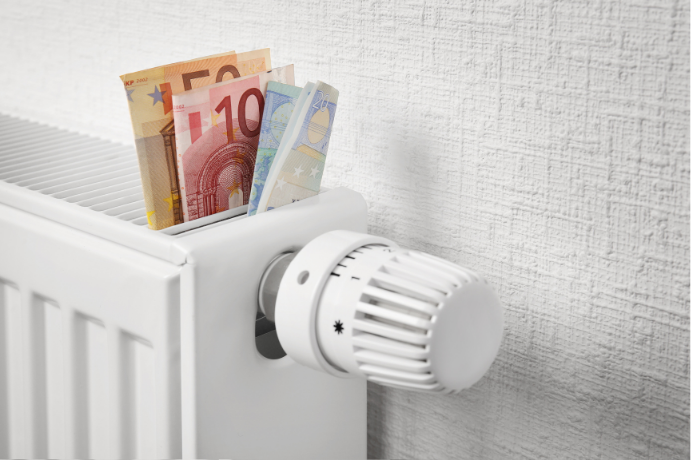
In multi-family buildings with central heating, heating costs are usually allocated partly based on your actual consumption and partly based on the living space. This means that those who heat less with their radiators will primarily reduce their consumption-based share. A basic share is charged regardless of consumption. Take a close look at your heating cost statement to see how high your consumption-based share is.
1. Use radiators correctly
- Do not block radiators with furniture or curtains so that the heat can circulate freely throughout the room.
- If a radiator gurgles or does not get hot enough at the top, it should be bled. If in doubt, contact your property management company.
- Programmable thermostat heads can often be replaced without tools. Keep the original ones so that you can reinstall them when you move out, and if in doubt, clarify this with your landlord beforehand.
2. Reduce heat loss without renovation
- Self-adhesive sealing strips on windows and doors and a draft stopper in front of the apartment door help prevent drafts and can be removed without leaving residue.
- Thick curtains and closed roller shutters at night reduce heat loss through windows.
- Rugs make cold floors more comfortable.
3. Zone heating: warmth you can take with you
A major advantage for tenants: zone heating, such as the Aura heated rug, does not need to be installed. Simply place it where you sit and plug it into an outlet. No drilling, no wiring, and no changes to the heating system. And when you move, simply take it with you.
Because the heated rug provides warmth directly where you spend your time, you can turn down the radiators in the room slightly. This reduces your consumption-based share of the heating costs. The electricity for the heated rug is covered by your own electricity contract. With a timer or presence detection, it only heats when you are actually there.
4. Pay attention to moisture and mold
Even if you want to save money, you should still not let the apartment get too cold. Cold walls promote condensation and mold, and as a tenant, you are obliged to help prevent mold by heating and ventilating properly. As a rule of thumb, do not let living spaces drop below approximately 16°C for extended periods and ventilate thoroughly several times a day. A simple hygrometer will show you whether the humidity level is within the safe range.
5. Generate your own electricity
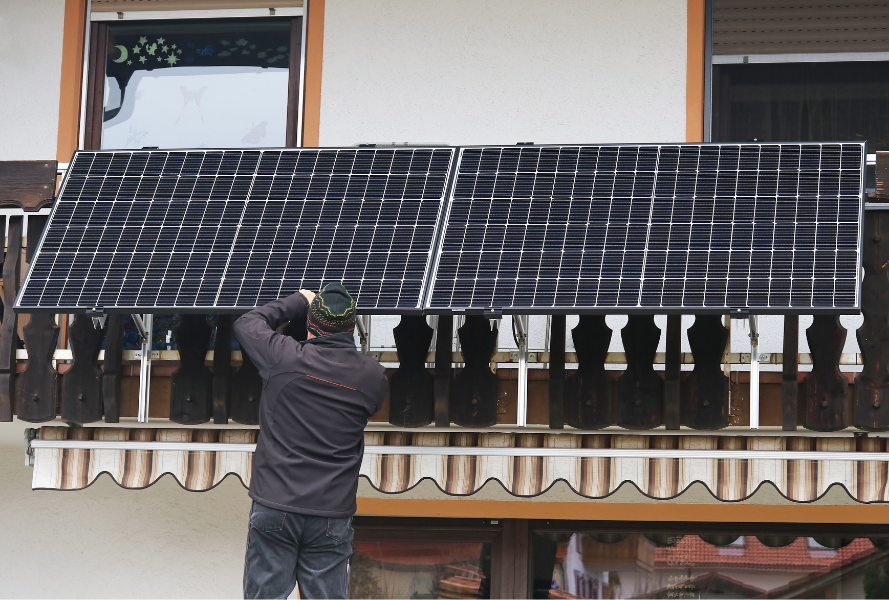
Since October 2024, tenants have a statutory right to have a balcony power plant permitted. You still need to obtain your landlord's approval. With your own solar electricity, a zone heating system can be partially powered directly, especially during the transitional season and during the day when working from home. Find out more in our guide to balcony power plants.
Conclusion
Even without influence over the heating system, tenants can do a lot: use radiators correctly, stop drafts, heat specifically where you sit, and keep an eye on moisture levels. A mobile zone heating system is perfect for this: no renovation, no permission for structural changes, and it simply comes with you when you move next.